As the weather clears up and warmer weather and summer appears on the horizon, the demand for landscaping work increases. Clients will always want to ensure their outdoor hosting areas are in good nick. This means tackling what can be a mountainous task in landscaping. Knowing what gear and machinery to bring onsite should be the first item ticked off the list.
Choosing the right excavator for the job can be a bit daunting, so we've highlighted our
four most common queries we get and shared our recommendation on when to use a big excavator and when to use a small one. All to help make your next commercial landscaping gig a breeze.
-
Site Clearing
First thing's first, whether you're clearing concrete, rocks, rubble, old garden beds or any unwanted landscaping from your job site, making sure you have the right piece of machinery to optimise efficiency during initial work stages is critical. The 1-tonne
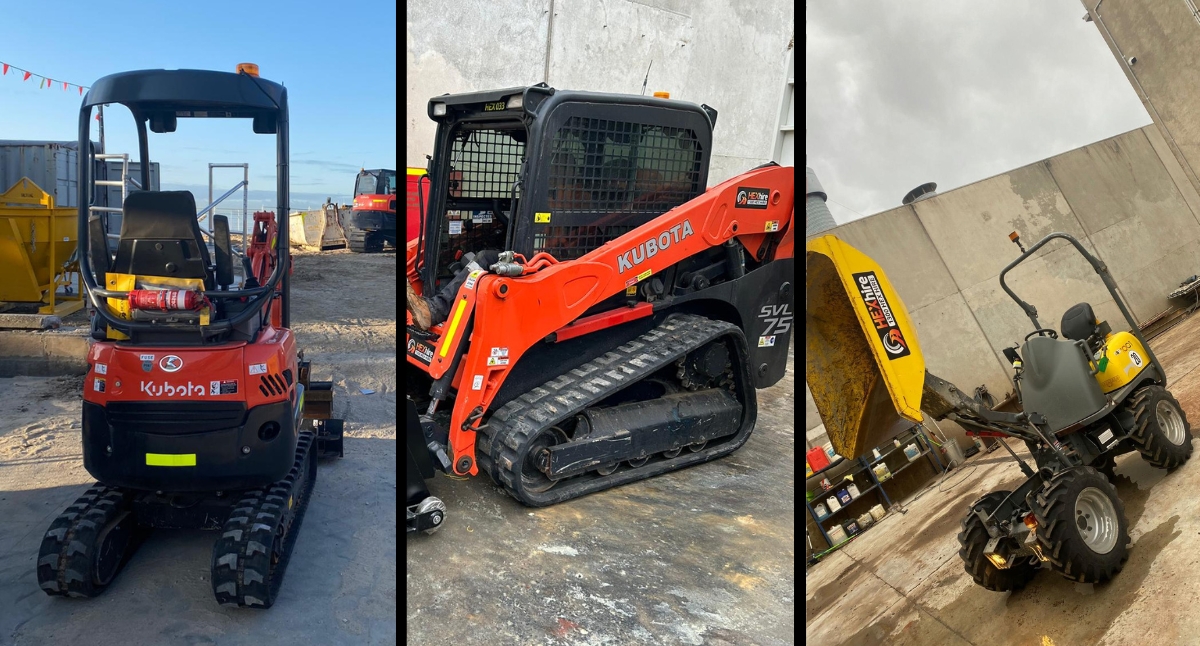
K0080-3 from Kubota can clear garden beds and light rubble; however, it's major drawback is that its breakout force only reaches 1,000KG (approx.) and with limited compatibility with other buckets, it will struggle with heavy concrete and large rock. In this instance, a larger unit like the
KX080 is the best way to go, as it will demolish thick concrete slabs with ease when using a hydraulic breaker, and boasts a bucket force of 6,650KG (approx.)
-
Earthmoving & Grading
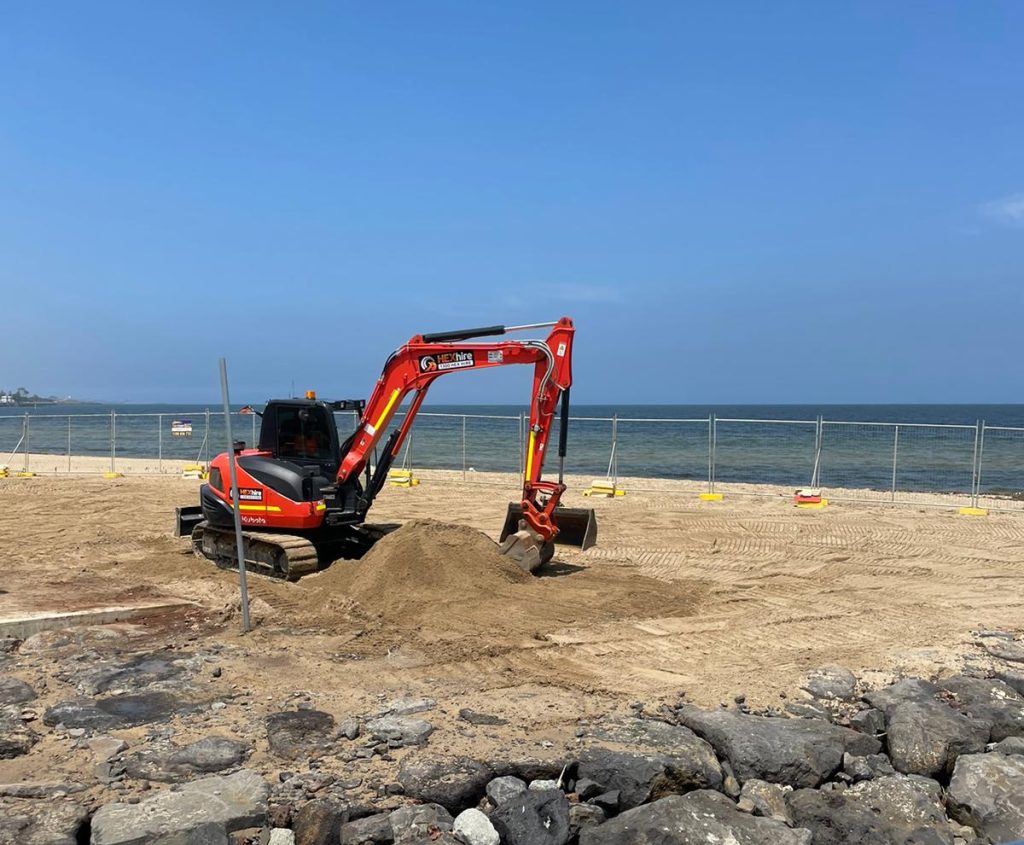
When it comes to reshaping terrain, creating and modifying slopes, or preparing areas to become lawn or garden space, the
Kubota K008-3 1-tonne is the machine for the job. It's perfect for managing small beds, planter areas and detail work, but lacks the pace to move volume, ultimately decreasing overall efficiency to complete the job. If you have the space and means for a larger excavator like the
KX080-4s, it will serve as the better option to handle bulk soil and larger cut-and-fill with ease, operating without the nimble and accessible drawcards that the 1-tonne boasts.
-
-
Trenching
When installing long irrigation lines, electrical conduits, or working with anything underground, the
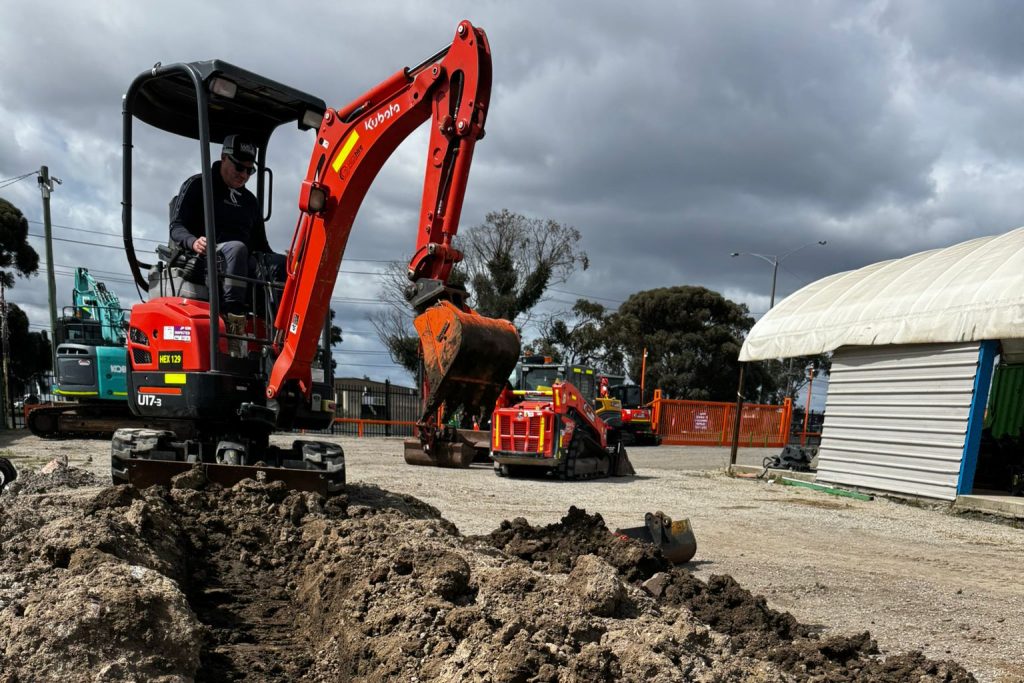
K008-3 1-tonne is the way to go. Its maximum digging depth is approximately 1.72 metres deep, making it perfect for shallower lines and conduit runs, especially for working around existing plantings or in limited space near preexisting buildings. When it comes to deeper or longer runs, like main services, the
KX080-4S is your best bet, boasting a maximum dig depth at approximately 4.6 metres deep and vertical wall digging depths to approx. 3.9 metres, versus the K008-3's 1.4 metres.
-
Drainage
If your next job has some elements of drainage work, like digging trenches for ag pipes, stormwater lines, pits and French drains, overall, the
KX080-4S is likely what will suit you best. This is due to the typical depth for stormwater lines and pipework as the 8-tonne can accommodate with its deeper digging ability and approx. 900mm bucket size. However, if you're primarily focusing on small French drains and shallow ag pipes, the
K008-3 is perfect for the job and, given its size, will make entries and exits off-site far easier given it can be transported via trailer or ute.
-
-
|
Kubota K008-3 (1-tonne) |
Kubota KX080-4S (8-tonne) |
| Weight |
~980KG |
~8,200KG |
| Width |
~700 – 860mm |
~2,200mm |
| Max dig depth |
~1,720mm |
~4,600mm |
| Vertical wall digging depth |
~1,400mm |
~3,900mm |
| Reach at Ground Level |
~3,000mm |
~7,200mm |
| Engine |
7.4kW diesel |
46.5kW diesel |
| Bucket breakout force |
~1,000kg |
~6,650kg |
-
What to keep in mind
The
1-tonne unit thrives where access, precision and ground protection matter whilst the
8-tonne is suitable for jobs where depth, volume and speed matter. Whilst you may find yourself on your next job working with both, it's important to remember which digger will work for you best.
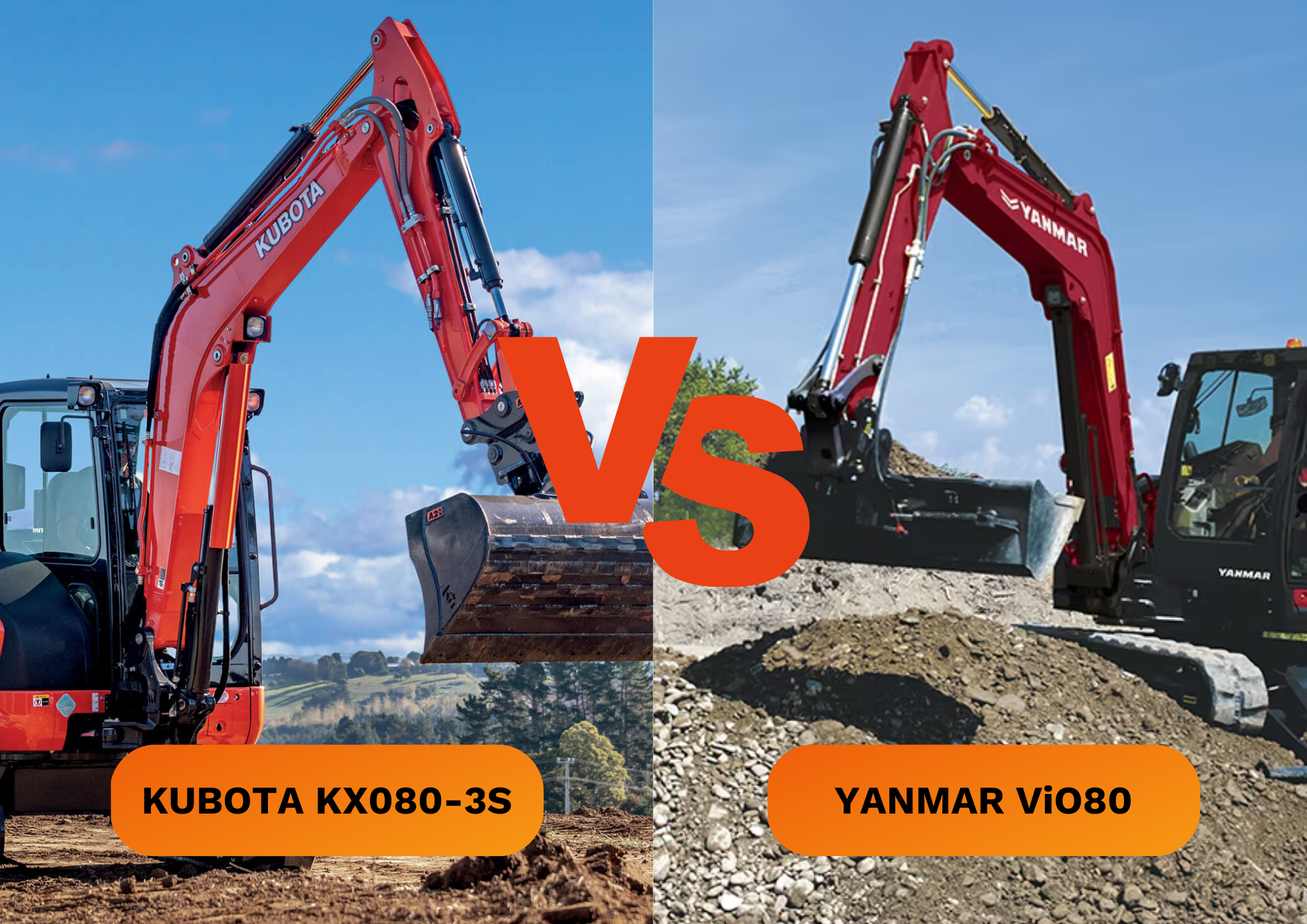
It's worth mentioning that the range at HEXHire isn't just limited to a 1 or 8-tonne excavator, nor is it exclusively with Kubota. We range several different brands such as Komatsu, Kobelco, Yanmar & Hitachi to name a few, and sizes, which range from machines like the
2.5,
3 or
5.5 tonne diggers, right up to larger units like the
Hitachi 35-tonne. These are available for hire; to keep you covered no matter what the job is.